

Views: 0 Author: Site Editor Publish Time: 2026-07-18 Origin: Site


Scaling up food production demands serious energy. Traditional stovetop methods require constant manual monitoring. They quickly drain both your time and electricity. Relying on standard pots limits your batch sizes significantly. It also forces you to manage active heat sources for hours. This creates stressful bottlenecks for community events, large family meal prep, or small-scale catering. You need a smarter way to handle large volumes of ingredients.
Upgrading to a specialized, high-capacity appliance shifts this heavy workload. It moves you from active stovetop management to automated, insulated heating. We built this guide to provide a strict, evidence-based evaluation framework. You will learn to bypass confusing marketing jargon easily. We will show you how to select an appliance optimized for both speed and energy conservation at scale. Read on to transform your mass cooking workflow.
Capacity vs. Usable Volume: Marketed quart capacity rarely equals usable cooking space; rule of thumb requires a 20% headspace buffer for safety, especially under pressure.
Energy-to-Speed Ratio: High-wattage (1000W+) models reach cooking temperatures faster, but overall efficiency depends heavily on the appliance's insulation and lid-seal integrity.
Pressure is Mandatory for Speed: For mass cooking, electric pressure multicookers reduce cooking times by up to 70% compared to traditional thermal cookers, significantly lowering active electricity draw.
You must first define your specific production goals before buying new equipment. Mass cooking means different things to different operators. You might need to batch-prep twenty meals every Sunday. Alternatively, you might cook daily dinners for a dozen people. Establishing clear success criteria prevents you from buying mismatched hardware.
Volume yield realities often surprise first-time buyers. You cannot fill a pot to its absolute brim. An eight-quart pot never yields eight quarts of cooked food. Manufacturers measure total liquid capacity up to the rim. Safe cooking practices require significant headspace. You must leave room for steam expansion and boiling action.
Starchy foods demand even stricter volume management. Ingredients like rice, beans, and lentils expand massively during cooking. They also create starchy foam. You should cap your fill line at fifty percent of the pot's total volume for these foods. Attempting to cook past this limit risks clogging pressure release valves. This can trigger automatic safety shutdowns.
Consider your daily throughput versus batching needs. Workflow efficiency dictates your ideal equipment setup. You must evaluate your kitchen space and electrical capacity. Ask yourself these practical questions:
Do you prepare one large, homogenous dish at a time?
Will you need to cook different side dishes simultaneously?
Can your kitchen circuits handle multiple heating appliances running together?
Do you have space to store multiple inner pots for rapid swapping?
Running a single ten-quart cooker works perfectly for massive batches of chili. However, running two six-quart cookers side-by-side offers more versatility. You can steam rice in one while braising meat in the other. Your daily menu determines the best configuration.
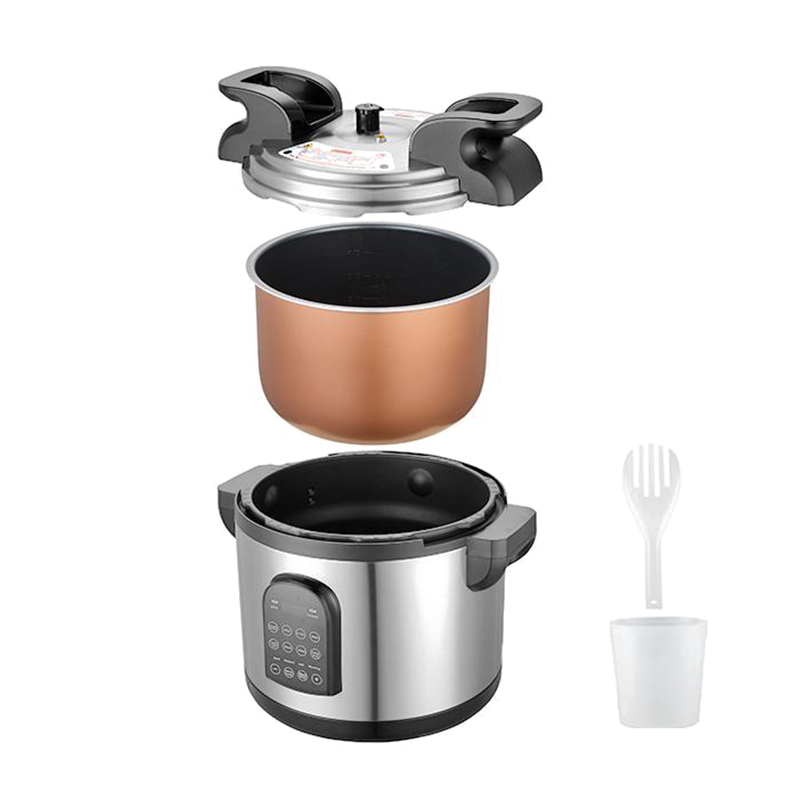
Finding a truly efficient electric cooker requires looking past the marketing box. You must evaluate the internal hardware. Wattage directly impacts your heat recovery speed. Large models holding eight or more quarts require 1000W to 1500W heating elements. Heating large volumes of cold liquids takes massive initial energy.
Higher wattage does not guarantee higher monthly energy bills. A powerful heating element brings food to pressure much faster. The appliance then cycles the element off. It relies on trapped heat to finish the cooking process. A lower-wattage unit struggles to reach target temperatures. It runs continuously and wastes energy fighting ambient heat loss.
Insulation and thermal mass dictate overall energy retention. Assess the build quality of the exterior housing carefully. An efficiently designed cooker features robust double-wall construction. Better insulation minimizes the frequency of the heating element cycling on and off. This stable thermal environment ensures even cooking without constant power draw.
Inner pot materials severely impact durability and heat distribution. You will typically choose between ceramic, non-stick, and stainless steel. Non-stick coatings degrade quickly under heavy daily use. Ceramic inserts can chip when dropped. We highly recommend thick-bottomed, 3-ply 18/8 stainless steel inserts. They offer superior heat distribution and eliminate concerns about flaking coatings.
Precision temperature controls separate premium devices from basic models. Advanced cookers feature internal microprocessors. These chips monitor heat levels via dual sensors. They dynamically adjust heating curves based on food volume and temperature. This smart modulation prevents scorching at the bottom of large batches.
Best Practice: Always pre-heat your stainless steel inner pot before adding cold meats to prevent sticking.
Common Mistake: Using abrasive steel wool on your inner pot degrades its smooth finish over time.
Best Practice: Inspect the heating element disc monthly to ensure no debris blocks heat transfer.
Various technologies promise fast results. You need to understand the underlying physics to choose correctly. We can compare the three dominant appliance categories used for scaling up kitchen production.
Electric pressure cookers stand as the undisputed leaders for fast mass cooking. They operate on a simple but powerful physical principle. A tightly sealed lid traps steam inside the chamber. This rising pressure increases the boiling point of water. The internal temperature climbs to approximately 240°F (115°C).
This superheated environment yields dramatic results. It forces moisture and heat into tough cuts of meat rapidly. Bulk grains absorb water in a fraction of the standard time. Cooking times drop by up to seventy percent. This drastic time reduction translates directly into massive energy savings.
Standard multicookers and slow cookers offer distinct utility. We acknowledge their usefulness for specific tasks. However, they remain highly inefficient for fast production. They operate at lower temperatures and lose heat through unsealed lids. They suit low-and-slow, unattended overnight cooking well. They fail when you need rapid throughput.
Dedicated commercial grain cookers deserve evaluation under specific circumstances. You should consider them if your primary requirement involves solely cooking grains. They often feature specialized induction heating technology. This surrounds the entire pot with uniform heat. Unfortunately, they lack the versatility of pressure-based models. They cannot braise meats or extract bone broths quickly.
Technology Comparison Chart: Speed and Efficiency | ||||
Appliance Type | Primary Cooking Mechanism | Speed for Mass Volume | Energy Efficiency Rating | Best Use Case |
|---|---|---|---|---|
Electric Pressure Cooker | Trapped steam raises boiling point (240°F) | Very Fast (Up to 70% faster) | High (Relies on insulation) | Tough meats, rapid bulk beans, fast broths |
Standard Slow Cooker | Low, steady thermal conduction (190°F) | Very Slow (4 to 8 hours) | Moderate (Long cycle times) | Unattended overnight stews, delicate braises |
Dedicated Grain Cooker | Specialized induction or base plate heating | Moderate (Standard rice times) | High (Optimized for one task) | Exclusive daily production of rice or oats |
Cooking massive quantities introduces unique physical hazards. Boiling eight to twelve quarts of liquid requires serious respect. You cannot compromise on hardware safety mechanisms. A reliable appliance must feature multi-point safety systems to protect the user.
Handling thermal risks remains your top priority. Look for redundant pressure release valves. If the primary valve clogs with starch, a secondary valve must vent the steam. Anti-block shields over the exhaust pipes prevent food debris from escaping. Automatic lid locks must engage whenever internal pressure rises above ambient levels.
Electrical compliance guarantees basic manufacturing safety. Verify the presence of recognized testing certifications. Look for Underwriters Laboratories (UL) or ETL marks on the appliance base. You should strictly avoid cheap, uncertified import models. They pose severe fire hazards when drawing high continuous wattage over long periods.
Ergonomics and weight become daily operational challenges. A ten-quart inner pot filled with soup weighs heavily. Lifting this load from a deep appliance base strains your wrists. Prioritize models featuring reinforced, stay-cool handles directly on the inner pot. Ensure the exterior base utilizes non-slip rubber feet for countertop stability.
Ventilation and strategic placement require careful planning. Electric cookers do not generate open flames or heavy smoke. They generally do not require expensive commercial range hoods. However, they release massive plumes of concentrated steam during rapid depressurization. You must position your cooker away from low-hanging wooden cabinetry. Repeated steam exposure warps wood and ruins kitchen finishes.
Best Practice: Always use a long-handled wooden spoon to manually release pressure valves.
Common Mistake: Placing the appliance directly under overhead lights or smoke detectors during pressure release.
Best Practice: Let heavy starchy meals depressurize naturally for ten minutes before forcing the valve open.
You must look beyond the initial purchase sticker. Framing this as a long-term investment changes your perspective. A budget model breaking down after eighteen months disrupts your workflow entirely. You should target appliances demonstrating a proven track record of durability.
Focus your attention on the surrounding parts ecosystem. Even the most robust efficient electric cooker requires periodic maintenance. The silicone sealing gasket degrades from heat and absorbs strong odors. Float valves can misplace tiny silicone caps. Check the manufacturer's website before buying. Verify they actively stock and sell replacement gaskets, valves, and extra inner pots.
Possessing secondary inner pots optimizes your throughput. You can remove a finished batch of chili and immediately drop in a pre-loaded pot of rice. This continuous swapping keeps your heating base active. It maximizes your daily production yield without requiring a second machine.
Warranty terms and customer support channels reveal brand confidence. Prioritize manufacturers offering clear, multi-year warranty coverage. You want a responsive support team that understands heavy-duty usage. Review customer feedback regarding replacement claim processing speeds. Slow support leaves you without a vital cooking tool for weeks.
Your actionable next step involves analyzing your primary ingredients. You can map your menu to specific hardware requirements. We prepared a decision matrix to simplify this process.
Hardware Decision Matrix Based on Primary Ingredients | ||
Primary Ingredient Focus | Crucial Hardware Requirement | Why It Matters for Mass Cooking |
|---|---|---|
Heavy Meats & Roasts | Maximum Pressure PSI capability | Breaks down tough connective tissues rapidly. |
Rice, Beans & Legumes | Thick 3-ply base & anti-scorch sensors | Prevents starchy bottoms from burning onto the pot. |
Broths, Soups & Stews | Absolute maximum usable quart capacity | Allows high liquid volumes with adequate safety headspace. |
Implementing an advanced electric cooking system transforms your kitchen. It represents a significant investment in both time-saving efficiency and energy reduction. You eliminate the need to hover over hot stovetops. Instead, you gain predictable, repeatable results across massive food batches.
Large-capacity, pressure-capable multicookers deliver the highest verifiable returns on your investment. They slash cooking times drastically. Pairing these units with thick stainless steel inserts guarantees long-lasting durability. You avoid the recurring frustrations of peeling non-stick coatings and burnt bases.
Take time to measure your physical kitchen constraints. Cross-reference the exact dimensions of your shortlisted models against your available counter space. Verify your dedicated electrical circuits can handle sustained high-wattage draws. Armed with these specific data points, you can confidently upgrade your high-volume food production system today.
A: No. A higher wattage cooker draws more power instantly to heat up fast. However, it reaches target pressure much quicker than lower wattage models. It then cycles off and relies on insulation. This results in significantly shorter active heating durations and lower net energy usage per batch.
A: You need an 8-quart model at minimum. However, upgrading to a 10-quart or 12-quart model provides crucial safety headspace. Liquid-heavy bulk meals require extra room to boil safely. Larger pots give you the flexibility to scale up without risking overflow.
A: You must exercise caution. Heavy continuous use often exceeds residential duty-cycle limits and may void standard warranties. Commercial catering environments generally require NSF-certified equipment to meet local health code compliance. Always check the manufacturer manual regarding permitted usage environments.
A: Keep the heating element disc perfectly clean. Ensure the outside bottom of the inner pot is completely dry before insertion. Replace the silicone sealing ring every twelve to eighteen months. A degraded ring leaks steam, forcing the appliance to waste energy rebuilding pressure.


